What the move to Nine actually changes
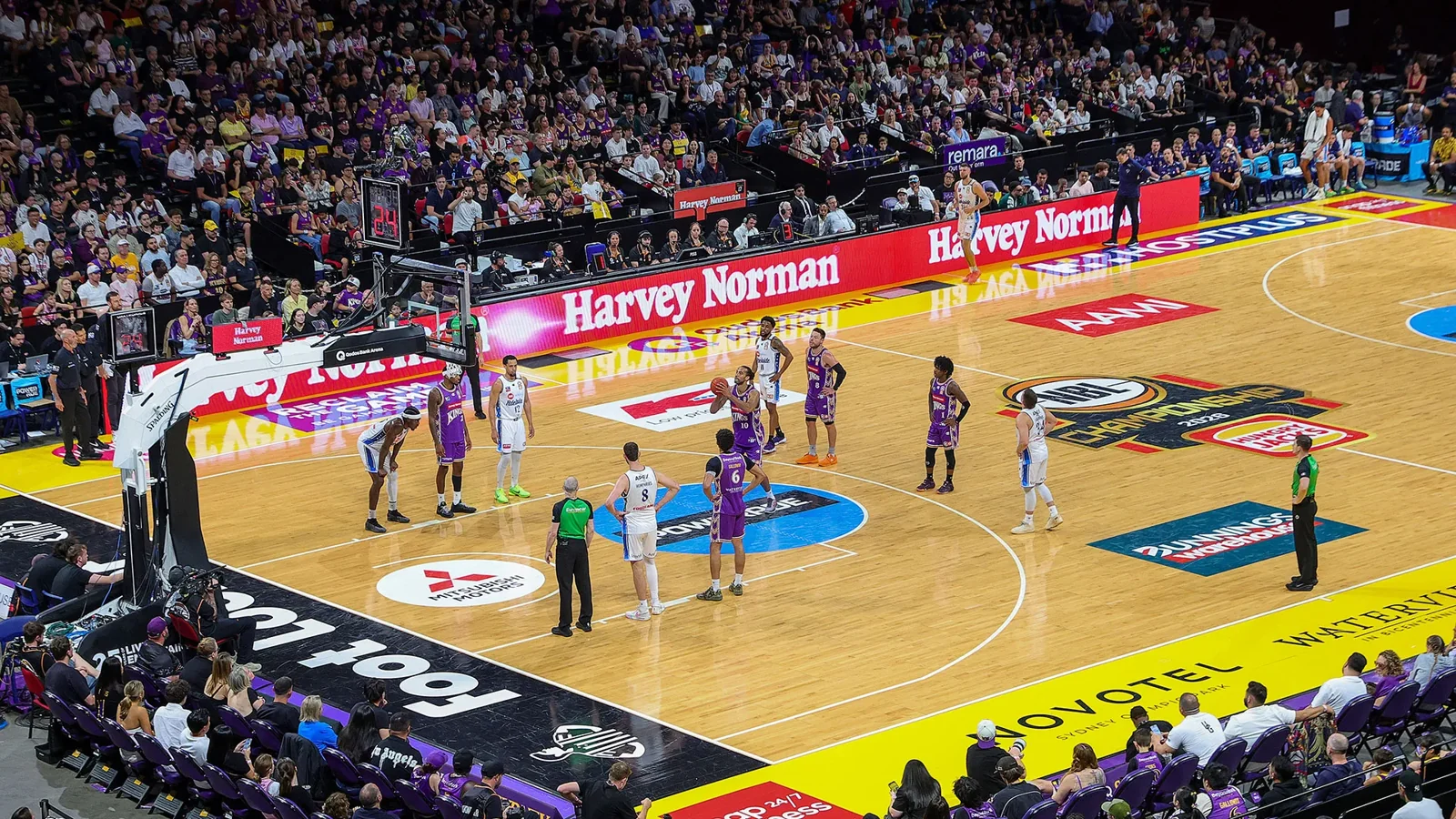
For an Australian basketball supporter, the important part of the NBL's move to Nine is the new weekly habit it asks you to form. Saturday becomes the centre of the free viewing offer. That can make the competition easier to find for somebody who wants a regular night of basketball, while making it less convenient for a family whose sporting weekend previously revolved around Sunday afternoon.
The announced two-year agreement puts a pair of Saturday games across the 9Network and 9Now, with selected marquee matches on the main Channel 9 service. It is a change in broadcaster and presentation, not a promise that every NBL fixture becomes free. ESPN retains the complete live schedule. That distinction should come before any debate about whether the new arrangement is an improvement.
A free window is different from every game
A supporter who enjoys watching whichever clubs happen to be playing can get substantial value from a regular free window. A supporter determined to watch every minute of one club has a different requirement. Their team will also play outside Saturday's selected coverage, so the free offer and complete team-following are separate products. Neither viewer is being unreasonable; they are simply asking different things of the schedule.
The channel name also needs care. The 9Network is the umbrella, not a guarantee that every game appears on the main Nine channel everywhere. The opening-night guide identified 9Go! and 9Now, with the Perth match also on Channel 9 in Perth. That is why a remembered announcement is less useful than the programme information attached to the particular game. Before assuming a match has disappeared, check the relevant network channel as well as the stream.
The free Australian arrangement should not be extended to New Zealand or another country by assumption. Broadcast rights are territorial. Being a Breakers supporter does not determine which service you can legally receive; your viewing location does. The practical question is where you are watching and which local programme is available there, rather than which club badge you follow.
There is a broader editorial benefit to a recognisable weekly window: a casual viewer can stumble across a meaningful game without first deciding to buy an entire sports service. Whether that viewer becomes a regular depends on the basketball, the presentation and the ease of finding the next broadcast. Access opens the door. It does not automatically create attachment to a club, or prove that the chosen night works for every existing supporter.
Use our free-to-air NBL listings for the next actual game, then judge the arrangement against your own viewing pattern. A contract headline explains the direction; a dated fixture and channel listing tell you what you can watch tonight.
Why Saturday suits one household and frustrates another
The disagreement over Saturday is easy to flatten into a fight between people who like change and people who do not. That misses the practical issue. A free game is only accessible if somebody has time to watch it. The same fixture can be an excellent evening out for one supporter and a poor fit for another household, even when both have exactly the same television channels.
The family viewing trade-off
In the August discussion about the new schedule, contributors raised the loss of a familiar Sunday afternoon window and the difficulty of bringing a young family to later games. Other replies preferred Saturday. The thread is useful because it identifies the competing needs; its small, self-selected sample cannot tell us which preference is more common across Australia.
For a parent, the relevant end time includes more than the final buzzer. Getting children ready, reaching the arena, leaving the car park and travelling home all shape whether a night is realistic. Watching at home removes some of that travel but does not remove bedtime. A double-header is also a larger commitment than one early game. These are ordinary scheduling constraints, not evidence that a family is insufficiently committed to basketball.
Sunday afternoons have their own disadvantages. They can compete with family commitments, weekend work, community sport or preparation for the following week. It would be just as simplistic to call Sunday universally family-friendly as to call Saturday universally inconvenient. The useful demand is for a spread of genuinely usable options across the season, alongside clear information about which ones are free.
The appeal of a regular basketball night
Saturday has a different strength: it can feel like a sporting occasion rather than something squeezed into the end of the weekend. A supporter can arrange dinner around a game, watch with friends or follow two contrasting match-ups. A recognisable weekly night also gives a broadcaster a straightforward invitation to make. Those are plausible benefits of the format, not proof of a particular ratings outcome.
There is no need to invent the commercial negotiation behind the change. Fans in the discussion speculated about money and the preferred television slot; speculation does not establish what Nine offered for a specific night or which party insisted on it. The published deal establishes the Saturday plan. Evaluating its consequences is fair; presenting an imagined negotiating history as fact is not.
The most persuasive criticism therefore stays concrete. Which supporters lose a convenient live window? Does another match time serve them? How easily can a casual viewer find the replacement? Those questions give the league and broadcaster something measurable to improve. Declaring the night good or bad in the abstract is less useful than comparing the actual choices a household has over a month of basketball.
Read the fixture time before reading the television slot
One trap in the new arrangement is to turn a promotional television window into a universal tip-off time. The season-opening guide illustrates why that fails. Its specific 19 September schedule listed Melbourne against Adelaide at 7.30pm AEST and Perth against South East Melbourne at 9.30pm AEST. The same guide also described the broader Saturday windows separately. The fixture entry is the useful answer for that date.
A programme can begin before the ball goes up. A television guide may also describe a block containing analysis and two games. Treating every timestamp as the start of the match can leave a supporter either unnecessarily early or frustratingly late. Check the club names, the date and the stated time zone together. If two pages disagree, a generic launch announcement should not automatically outweigh a current match listing.
Australia's clocks add another layer. Sydney and Melbourne move into daylight time; Brisbane and Perth do not. Adelaide has its own half-hour offset. A listing marked AEST is not interchangeable with one marked AEDT, even though casual conversation often calls both eastern time. The difference is especially relevant when a Perth fixture is promoted nationally and local viewers mentally subtract a familiar number of hours.
For a clearly labelled clock example, 8pm in Sydney on 17 October 2026 corresponds to 5pm in Perth, 7pm in Brisbane and 7.30pm in Adelaide. Those are conversions for that date, not an announcement of a match. The same written eastern clock time on another date may require a different conversion if daylight saving has changed. Saving an event to a calendar with the correct location is safer than memorising a season-long offset.
That discipline matters for family viewing as well as avoiding a missed first quarter. A double-header that looks like a late-night commitment on an eastern promotion may begin earlier locally in Western Australia. Conversely, a New Zealand supporter must also consider the date and the applicable service, rather than assuming an Australian free stream follows them across the Tasman. Rights and clocks are two separate checks.
The practical sequence takes less than a minute: open the dated TV schedule, identify the match, confirm your local tip-off, then check the named channel or streaming service. If you want pre-game coverage, look at the programme start as an additional time. That is a more reliable routine than searching for a remembered Saturday slogan and assuming the whole season follows it without exceptions.
Choosing between free coverage and full-season access
Start with the games you want, then choose the service. That sounds obvious, but sports subscriptions are often bought in the opposite order: a supporter sees a familiar platform, assumes the relevant package includes everything, and discovers the limitation close to tip-off. The free Saturday window makes that mistake easier to avoid if you first separate occasional viewing from complete club coverage.

Follow a club or follow the league
If your priority is one club, look at its next several fixtures and mark which fall within confirmed free coverage. The remaining dates reveal the gap you would be paying to fill. If your priority is enjoying good NBL basketball without following every round, the free selection may already meet your needs. There is no requirement to turn a pleasant Saturday habit into a full-season purchase.
The league's opening viewing guide lists ESPN through several Australian platforms, including Disney+, Foxtel services, Kayo and Fetch; it separately identifies Sky for New Zealand. That is an access map, not a statement that every plan on every platform carries the same entitlements. Confirm the specific package, supported devices and live channel before subscribing. This article does not quote a price that could become wrong when a promotion or package changes.
For free streaming, test 9Now on the device you plan to use before the match. A stream that works on a phone is not automatically the arrangement you want for a family television. Check the current service requirements and your connection rather than treating the word free as a guarantee of effortless setup. An aerial-based channel and an internet stream solve the same viewing problem through different equipment.
Replay is another separate question. A live-rights announcement does not establish how long a replay stays available, whether it appears immediately or which package includes it. A shift worker who will rarely watch live should therefore judge the replay offer directly. Paying for completeness makes little sense if the service does not fit the hours when that supporter can actually sit down and watch.
Finally, consider the value of watching beyond your own team. A neutral Saturday game can explain the next opponent's ball-screen defence, a rival guard's decision-making or how another coach closes a tight fourth quarter. That is useful basketball context as well as entertainment. Free coverage works best when it is easy enough to sample that viewers begin recognising those stories between the fixtures they originally came to see.
What would make the new arrangement a success?
The right test is whether the arrangement creates a sustainable viewing habit while continuing to serve people who already care about the league. A large network can make basketball visible to more households, but visibility and loyalty are different outcomes. A viewer needs a reason to return after the first exciting finish, and an existing supporter needs reliable information rather than a weekly search for the correct channel.
In the NBL's interview with Nine programming director Geoff Dyer, he described the competition's growth and ratings momentum as reasons it attracted the network's interest. That explains the broadcaster's stated enthusiasm. It should not be recycled as independent proof that the new Saturday arrangement has already increased audiences. Assessing that would require comparable viewing data, a clear measurement period and care over how streaming and television audiences are counted.
The first practical measure is discoverability. Can somebody who saw a highlight find the next live game quickly? Does a programme guide make the local start time and channel clear? Does the broadcast tell a new viewer why the contest matters without assuming they know every import, injury and ladder implication? Those details are less glamorous than a rights announcement, but they decide whether a casual interest becomes an appointment.
The second is continuity. A good broadcast helps the viewer connect one Saturday to the next: who changed their starting line-up, which defensive adjustment worked and what the result means for the following opponent. Basketball is rich in those details. Explaining them makes the free window more valuable than a series of isolated scores. It can also encourage viewers to seek additional games because they now understand the developing season.
The third is the range of usable choices for supporters. Saturday can remain the main free appointment while clubs and the league still explain the other family-friendly dates in the calendar. The answer to a disappointed Sunday regular should be specific information about alternatives, not a lecture that prime time is automatically better. Equally, somebody enjoying a Saturday double-header should not have to apologise for preferring a different sporting routine.
My view is that the Nine move offers a credible chance to make NBL basketball easier to sample. Its weakness will be felt wherever a familiar daytime habit becomes harder to replace. Judge both sides against actual fixtures and viewing experience. Keep the current free coverage list handy, check the local clock, and decide whether the new weekly invitation fits the way you watch basketball.
Join the conversation
Share a question or a thought about NBL basketball. Comments are reviewed before they appear. Keep it friendly and on topic.
No comments yet. Start the conversation.
Sign in with Google to leave a comment. Your email address is not displayed.