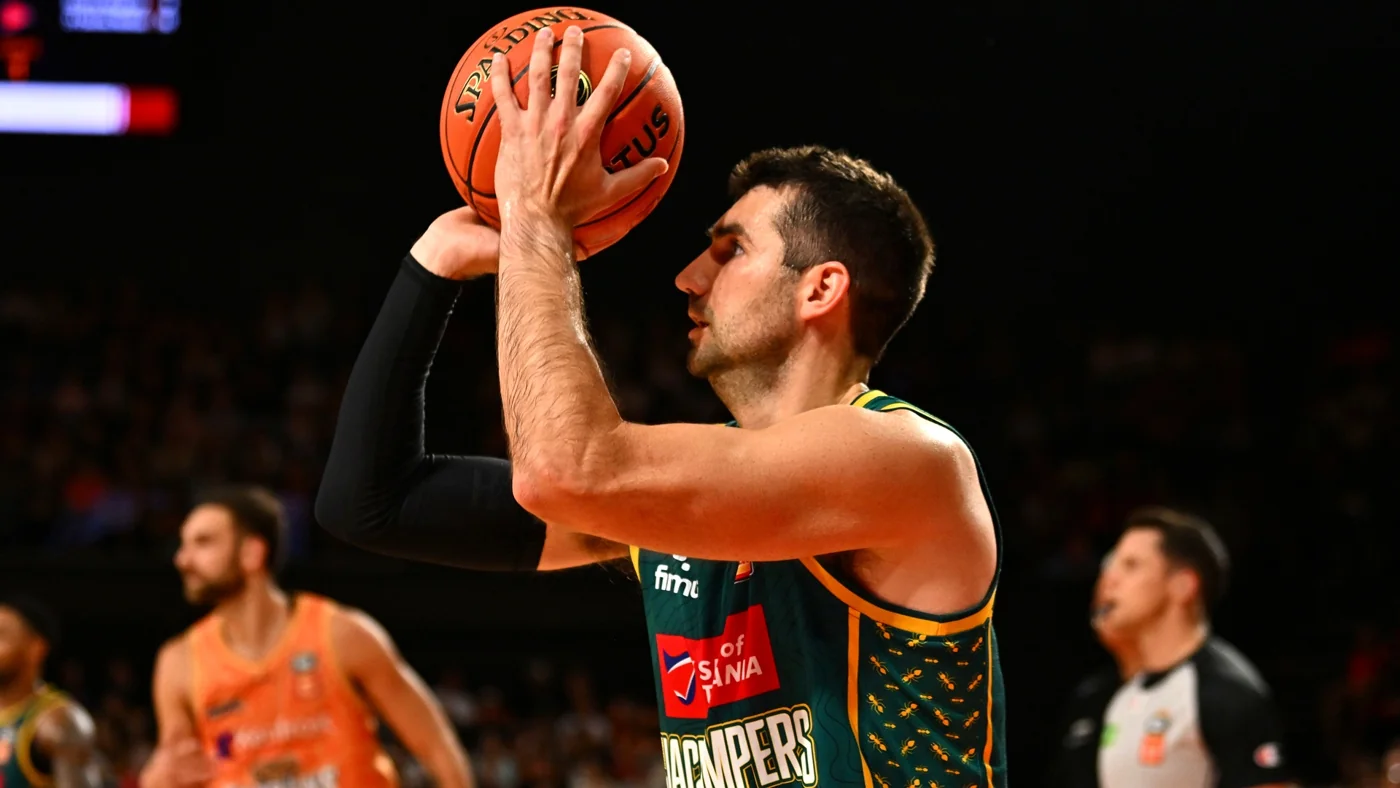
What the league admitted about the Mathias shot
The frustration in the Tasmania-Cairns finish was unusually clear: the league subsequently agreed that a foul had been missed, but the game could not be repaired through the available review mechanism. Those two statements are compatible. One concerns the quality of the original decision; the other concerns the powers officials had once no call was made.
In its 27 September statement, the NBL identified the Round 2 game at Cairns Convention Centre on Wednesday 23 September. Head of Referees Scott Butler confirmed that Keanu Pinder fouled Dakota Mathias in the act of shooting with eight seconds left in the fourth quarter. The proper call would have given Mathias three free throws. The league also said the absence of a floor call meant the play could not be revised under the applicable rules.
That gives supporters a stronger starting point than an argument about whether the contact was merely a matter of taste. For this particular incident, the league acknowledged an officiating error. It did not announce a new result or claim that television pictures could be used after the event to award the missing opportunity. The limitation was procedural, not a retrospective declaration that the contact had been legal.
The contemporary match account records Cairns winning 93-87 and describes the Taipans holding a four-point advantage before the late corner attempt. That context explains why the missed call mattered without establishing that Tasmania would otherwise have won. A six-point final margin does not erase the value of a lost late opportunity, just as a lost opportunity does not prove a different final score.
The central question is therefore narrower and more useful than whether the league should simply apologise. If officials can see an error on replay, why are they sometimes unable to fix it? Answering that requires separating what the evidence shows from what the competition authorises officials to reconsider. It also requires care with dates: a statement about one September incident is not a complete catalogue of every review provision currently available in basketball.
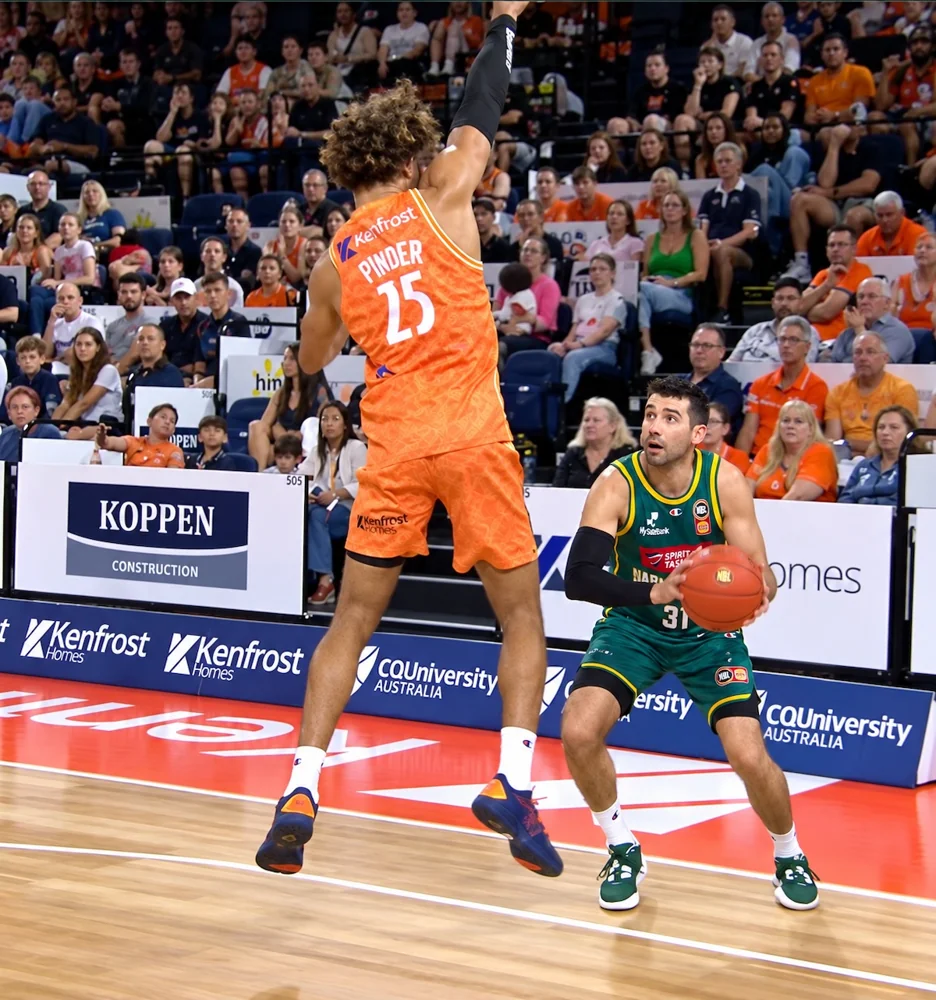
A camera angle and a power to intervene are different things
A replay monitor can answer a visual question without creating a legal route to change the game. That is the difficult distinction at the centre of this controversy. Better pictures may strengthen the conclusion that the original decision was wrong, but the pictures do not themselves expand the officials' jurisdiction.
The current FIBA framework in Appendix F defines review around specified game situations and procedures. It also requires clear and conclusive visual evidence to correct an initial decision. Those are separate requirements: the situation has to be eligible, then the evidence has to justify correction. Meeting only the second requirement is insufficient.
Reviewing a call is not a general appeal against play
Imagine an official calls a contact foul and the permitted review question is whether its classification should change. There is an identified decision to examine within a listed category. Now imagine ordinary play continues without that contact being called. Asking the monitor to create a shooting-foul decision is a different intervention. The September NBL statement specifically says the latter route was unavailable for the Mathias incident.
That can feel perverse from a seat in the stand: a more obvious error can survive while a less obvious decision receives lengthy examination. But eligibility is not ranked by how angry the crowd becomes or how large the mistake appears. A narrowly authorised system can correct a difficult eligible question and leave an obvious ineligible one untouched. The case for changing that design should be argued openly rather than pretending the existing design already grants unlimited power.
There is a related trap in blaming the coach for failing to challenge. Before judging a coaching decision, establish that the requested question was eligible and the applicable challenge conditions were met. A coach cannot manufacture jurisdiction by drawing the challenge signal more emphatically. Nor should a viewer infer that a later stoppage automatically opens the whole preceding possession to reconsideration. A stoppage may supply the procedural moment for an eligible review; it does not necessarily supply the eligibility itself.
What the current replay and challenge framework actually covers
The current framework is best read as a list of authorised questions, not an invitation to re-officiate a possession. Appendix F separates end-of-period reviews, situations normally available in the final two minutes of the fourth quarter or overtime, and situations that may be reviewed at any stage. The applicable procedure is part of the rule, alongside the subject being examined.
The defined review categories
Examples include identifying whether a successful shot was worth two or three points, whether two or three free throws should follow a foul on an unsuccessful shooter, and whether a called foul should be upgraded, downgraded or placed in another specified classification. Clock problems and involvement in violence have their own provisions. These are different questions, with different triggers; they should not be compressed into a slogan that every mistake can be reviewed.
The NBL's new-rules explanation identifies two particular expansions. One concerns whether the thrower-in had released the ball when a defensive foul occurred during a late throw-in situation. Another concerns goaltending or basket interference after a foul. The league says the new provisions also apply to a head coach's challenge. Neither expansion amounts to a general authorisation to create an ordinary shooting-foul call from any unwhistled contact.
A challenge does not remove every restriction
A head coach's challenge can alter the route by which an eligible question reaches the monitor. In the FIBA text, certain time restrictions applying to officials' reviews do not apply in the same way to a challenge. The subject matter still has to fall within the listed review situations. Permission to request review at another point in the game is not permission to ask any question whatsoever.
A useful contrast comes from Melbourne United's account of the 24 September derby: a foul initially called on Fabijan Krslovic was overturned after a successful challenge, allowing his block on Tanner Krebs to stand. There was a called incident to reconsider. That example should not be treated as evidence that the Mathias no-call could have been challenged in exactly the same way.
For the same reason, avoid the absolute claim that nothing uncalled can ever come within a replay provision. The current rules include specific categories, such as identifying involvement in violence, whose wording needs to be considered on its own terms. The defensible conclusion is precise: the league said the missing shooting-foul decision in this case could not be supplied through the available mechanism. Broader claims need their own rule, rather than an extrapolation from that statement.
Three free throws would have restored a chance, not awarded a win
The fairest description of Tasmania's grievance is that it lost an opportunity it should have received. Three free throws are three attempts, not three automatic points. Even if all three had been made against a four-point deficit, the immediate arithmetic would have left the JackJumpers one point behind. That is a hypothetical reconstruction, not a revised score or a claim that the rest of the game would unfold identically.
From there, possession, the clock, the next inbound and the teams' tactical choices would all matter. A coach might decide when to foul, which opponent to pressure and which players should defend the restart. Cairns would make decisions in response. Changing the earlier whistle changes the incentives facing both teams, which is why simply inserting three points into the final score produces a misleading alternative result.
The same reasoning answers the opposite dismissal: Tasmania lost by six, so the missing call supposedly could not have mattered. The final margin is the result of the actual sequence, including the missed opportunity and what followed it. It cannot prove that an earlier high-value chance was irrelevant. A supporter can reasonably care about the lost route back into the game without claiming the league took away a certain victory.
There are therefore two standards of criticism. The officiating standard asks whether a foul should have been called; the NBL has supplied its answer. The outcome standard asks what would have happened after the correct call; that cannot be known with certainty. Keeping them separate strengthens the criticism because it does not require an exaggerated claim to establish that the error was important.
For the teams, this is also a reminder to analyse the whole contest without using that analysis to excuse the missed call. Shot selection, rebounding and earlier execution remain part of a performance review. None makes an acknowledged late foul disappear. The useful position is to hold both thoughts together: one decision was wrong, and a basketball game still contains many other decisions that deserve examination.
Why supporters disagree about expanding replay
The public r/nbl discussion of the incident captures a real tension without providing a representative survey. The original poster wanted Tasmania to receive the chance the correct call would have supplied, while also disliking lengthy reviews. Replies included acceptance that mistakes are part of sport, frustration with inconsistent contact standards, and proposals to expand challenge opportunities.
Those positions are not necessarily contradictory. A fan can want a clearly missed foul corrected and still dislike the experience of watching a game repeatedly stop. Another can accept that no system will eliminate every error while still expecting the league to improve. The interesting disagreement concerns which errors a review system should target and how much disruption is justified to correct them.
Accuracy, delay and what happens to the intervening play
Consider a hypothetical proposal allowing a coach to flag an uncalled ordinary foul while play continues until the next stoppage. It immediately raises a second question: what happens to the basketball played in between? The other team might score, a player might commit another foul or someone might be injured. A workable rule needs to specify the treatment of those events and the point from which play restarts. It cannot end with a promise to look at more video.
A system also needs a standard of evidence and a clear subject for review. Some questions, such as a foot relative to a line or a release relative to a clock, can be framed tightly. Contact questions may require assessing legal guarding position, the attacker's movement and the effect of the contact. Replaying only the collision at very slow speed can hide the setup that made the judgement meaningful.
One contributor's suggestion of extra challenges is therefore a policy preference, not a description of the current rules. The sensible test for any reform would include how often it corrects an important error, how long it takes and what new disputes it creates. Supporters should be able to demand better accuracy without being promised a frictionless solution. The league, in turn, should explain a review boundary in language that makes its trade-offs visible.
What meaningful accountability should look like next
The league's statement said the play had been reviewed with the officiating crew as part of its standard post-game training process. That is a specific announced response. It is not evidence of an undisclosed suspension, a promise to change the replay rules or an intention to replay the match. Supporters should distinguish the action the league actually reported from the additional action they would prefer.
A useful public explanation should answer three questions. What should have been called? Why could the available system not correct it? What kind of learning or policy assessment follows? The first two can be explained without publishing private personnel material. The third need not promise perfection, but it should make clear whether the issue is a missed observation, an interpretation problem or a deliberate boundary in the review system.
The Mathias case contains at least two separate improvement tasks. Better officiating can reduce the chance that the original foul is missed. A review-policy assessment can consider whether a defined class of missed calls should become correctable and at what cost. Expanding replay does not automatically solve positioning and recognition, while better training cannot remove a jurisdictional restriction that the rule deliberately retains.
For supporters watching the next close game, the practical habit is to establish the review question before judging the review outcome. Listen for the original call, the category the crew is examining and the reason given for the final decision. If a challenge is refused, ask which eligibility condition prevented it. If the monitor does not provide conclusive evidence, that is a different explanation from a situation that was never reviewable.
Follow future contests through the NBL calendar and use the results pages for what actually happened on the scoreboard. Keep criticism of the missed call alongside that record rather than rewriting it. The strongest demand after this incident is for understandable rules, accurate decisions and clear explanations when they fail. That demand remains valid without claiming Tasmania was guaranteed a victory or that every disputed touch should send the game back to a screen.
Join the conversation
Share a question or a thought about NBL basketball. Comments are reviewed before they appear. Keep it friendly and on topic.
No comments yet. Start the conversation.
Sign in with Google to leave a comment. Your email address is not displayed.