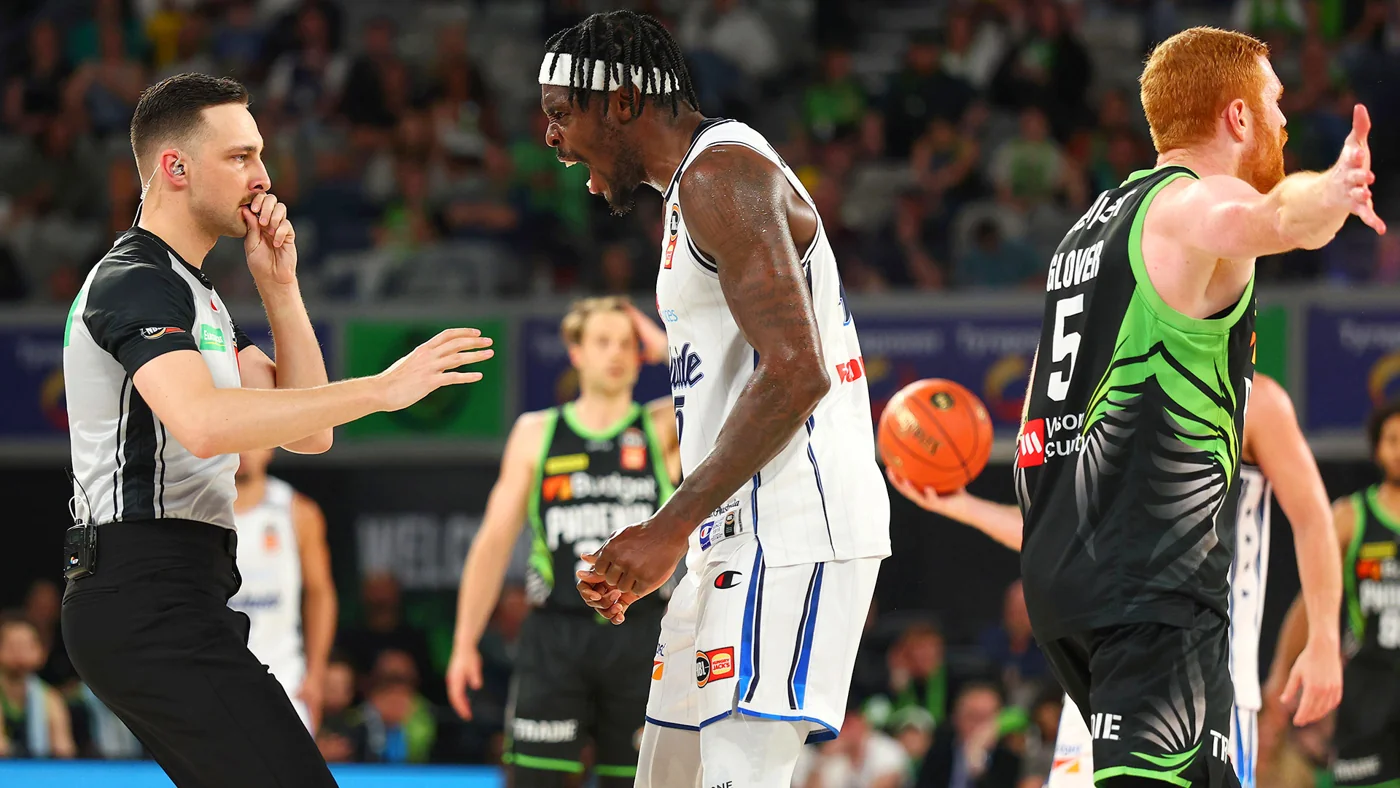
The 55-foul game explains the frustration, not the whole season
A game containing 55 fouls and 72 free-throw attempts gives supporters an obvious reason to talk about the whistle. It interrupts rhythm, stretches the distance between live possessions and changes which players a coach can use. But the Tasmania-Melbourne example is most valuable when treated as a case to examine, rather than a statistic that supposedly proves the whole NBL season is being officiated badly.
The NBL's 5 October account reports 27 free-throw attempts in the first quarter alone. Six players fouled out: Luke Travers, Cole Anthony and Josh Oduro for Melbourne, and Josh Bannan, David Johnson and Ben Gold for Tasmania. Those are substantial basketball consequences as well as an awkward television experience. A fan who wanted to watch the leading players decide the closing possessions had a concrete reason to be dissatisfied.
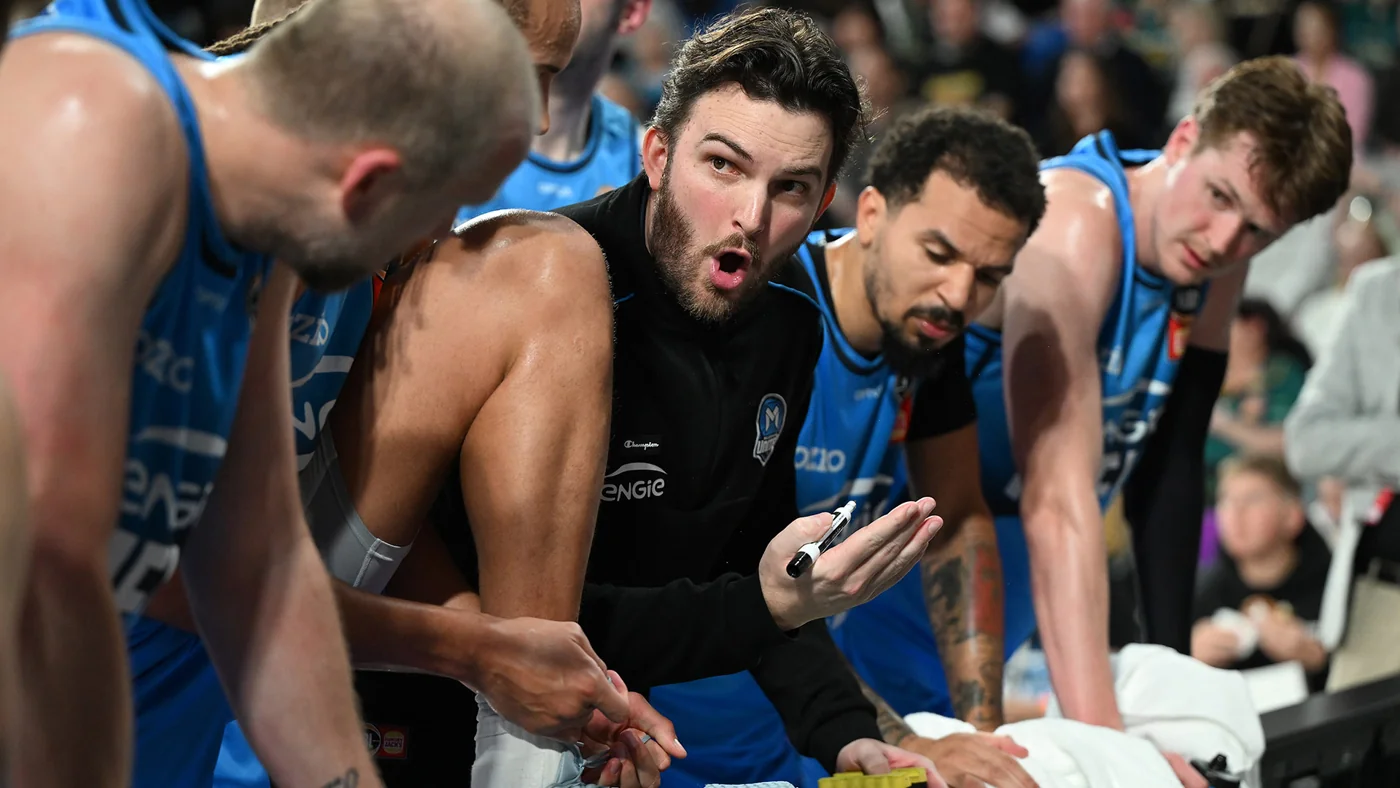
Head of Referees Scott Butler did not dismiss the concern. He said some calls could have been passed on to help the game and described the matchup as a demanding combination of styles. Melbourne coach Jacob Chance also acknowledged that his team had controllable fouls and needed to adjust, while Scott Roth recognised how difficult the officials' job could be. The official account therefore contains criticism, coaching responsibility and context, rather than a simple division between angry teams and defensive referees.
Butler said it was the first NBL27 game to reach 50 fouls at that point, compared with six such games across NBL26 and seven across NBL25. Those counts do not by themselves establish a rising rate. The seasons provide different amounts of completed basketball, and the statement does not supply a like-for-like distribution of foul totals. Using the figures to declare a competition-wide deterioration would go beyond the evidence.
The better starting point is the experience of this particular game. Which whistles protected a genuine disadvantage? Which marginal contacts might have been allowed to pass? Which fouls were avoidable player decisions? And how well did the participants communicate after a decision? Those questions move the debate from a striking total towards the decisions that produced it. They also leave room for two truths: the game could have flowed better, and not every interruption was necessarily an officiating error.
Flow and accuracy need to be judged separately
A low foul count is not automatically good officiating. Officials can create a smooth-looking game by missing contact that unfairly changes the contest. A high count is not automatically bad either: players can commit repeated clear offences. The challenge is to preserve legitimate competition while identifying the contact that deserves intervention. Judging flow alone misses half of that task.
Which contact changes the basketball play?
Article 48.3 of the current FIBA rules expressly addresses advantage and disadvantage. Officials should avoid unnecessarily interrupting play for incidental personal contact that neither advantages the responsible player nor disadvantages the opponent. It also asks for consistency and a balance between control and flow. That is a framework for judgement, not a target number of whistles.
Consider two hypothetical possessions. A defender's hold prevents a cutter reaching an open space at the right moment; the offence loses a real option even if the contact looks small. Elsewhere, players brush against each other without changing balance, movement or opportunity. Treating every visible touch identically can produce the appearance of precision while missing the difference that matters to the basketball action.
Butler's acknowledgement that some calls could have been passed on fits that discussion. It does not identify every one of the 55 calls as wrong, or supply a licence to ignore marginal-looking contact that actually creates a disadvantage. A proper review needs the possession, the relevant rule and the effect of the action. A highlights montage of whistles cannot do all of that work.
Why a free-throw gap does not prove bias
Free-throw totals combine different events. Shooting contact, team-penalty situations, technicals and deliberate late fouling can all contribute. Teams also choose different attacking and defensive styles. A side that drives and attacks the rim presents different questions from one taking more uncontested jump shots. Equal treatment does not require equal opportunities at the line.
That does not make an uneven total irrelevant. It can be a useful prompt to examine the possessions. The unsupported leap is to treat the number as the conclusion: either proof of bias or proof that the more aggressive team deserved everything. Look at comparable actions and explain the decisions. For this game, no independently coded possession audit is being presented here, so the totals remain a starting signal for analysis rather than a verdict on every whistle.
Foul trouble changes the contest before anyone fouls out
The most visible consequence of a foul-heavy game is a player leaving after a fifth foul. The less visible consequence starts earlier. A coach deciding whether to protect a key defender may have to alter a rotation, change a matchup or ask someone to defend more cautiously. Those choices can reshape the contest long before an exclusion is announced.
Imagine a starting big in early foul trouble. Keeping that player on court preserves familiar screening and rim protection but risks losing them later. Sitting them protects availability while asking a reserve to cover different minutes and perhaps different opponents. The right decision depends on the score, the matchup and the bench. The rule does not dictate the coaching answer, but it changes the options and their costs.
A perimeter defender under the same pressure may become less willing to challenge a drive or fight through contact around a screen. That can make team help arrive earlier and open a pass elsewhere. These are possible tactical effects, not a claim that a particular sequence occurred in the Tasmania-Melbourne game. The point is why a foul count matters beyond the number of free throws it produces.
Team fouls add another layer. Under Article 42, the penalty situation begins after four team fouls in a quarter, with the rule specifying which subsequent personal fouls produce free throws and retaining an exception for team-control fouls. It is misleading to say every fifth whistle automatically has the same sanction. Still, repeated early fouls can change how defenders approach otherwise ordinary late-quarter possessions.
Chance's acknowledgement of controllable Melbourne fouls is useful here. Players can improve positioning, stop unnecessary reaching and manage their reactions even while a team disputes other decisions. That is practical coaching, not an admission that every contested call was correct. The league can work on its threshold for incidental contact while teams work on choices that leave officials an easier decision. Asking only one side to improve turns a basketball problem into an argument with no useful next step.
Rucker's complaint is about the viewing experience too
Derek Rucker added another dimension to the debate later in October. In the NBL account of his comments, the former MVP criticised players' repeated complaints and argued that the behaviour was wearing to watch. His remarks followed Melbourne's game against Sydney, in which Sam Waardenburg and Xavier Cooks received technical fouls after expressing frustration with calls.
That is Rucker's assessment of the product and the players' conduct. It is not a finding that every original call was correct, nor evidence that all supporters share his view. The important distinction is that a game can become tiring through both excessive interruption and the repeated arguments surrounding decisions. Fixing one does not automatically fix the other.
There is room for player emotion in a close contest. A quick request for clarification can also help a player understand how to defend the next possession. But repeated demonstrations can occupy the attention that should be directed towards a matchup, a restart or a teammate's instruction. The basketball cost need not wait for an official to issue a technical.
Dissent can create a second basketball problem
Once a player receives a technical, the team has a new decision to manage alongside the original whistle. The current rules distinguish Category 1 technical conduct from Category 2 offences, but both player categories carry consequences. The free throw, the player-foul total and the team-foul entry matter; Category 1 also contributes to the specified automatic game-disqualification combinations.
That creates a strong practical reason for coaches to demand a controlled response. Even if a team believes the original call was wrong, conceding an avoidable further penalty does not restore the lost possession. A player may want to demonstrate that the decision mattered, but the opponent is happy to receive any additional advantage created by that demonstration.
Officials have responsibilities in the exchange as well. Clear signals, brief understandable explanations and consistent treatment of comparable behaviour can reduce avoidable confusion. Players should not have to guess whether a technical concerns words, gestures or a procedural issue. The useful standard is mutual clarity: maintain the right to assess the original decision while recognising that the response to it is a separate action with its own consequences.
Consistency means comparing actions, not demanding equal totals
Consistency is the most reasonable demand in an officiating argument and one of the easiest words to use loosely. It should mean that comparable actions receive a comparable application of the rule. It should not mean that each team ends the night with the same foul total, or that an official must make a later call to compensate for an earlier mistake.
The same standard across teams and quarters
Start a comparison with the whole action. Where was the defender? What movement did the attacker make? Did the contact displace someone, restrict movement or remove an advantage? Was the player shooting, controlling the ball or setting a screen? Two clips can share an obvious collision while raising different rule questions because the setup and timing differ.
The standard should also remain intelligible as the game develops. If a small hold changes a cutter's route early, the same meaningful restriction should not become acceptable simply because the score is close late. Equally, a harmless brush should not need a whistle merely because officials called a different, consequential contact in the first quarter. Consistency concerns the principle and the comparable action, not the superficial size of the collision.
That gives supporters a productive way to make a complaint. Identify the two possessions and explain the relevant similarity. Allow for an angle that hides contact or reveals it, and distinguish uncertainty from a proven error. A league explanation that engages with those particulars is more helpful than a general assurance that everyone is working hard. A fan comparison built only on team colours or free-throw totals is easier to dismiss.
New categories make clear explanations more important
The NBL27 rule update gives communication added importance. A disruptive foul and a flagrant foul do not carry the same significance for automatic game disqualification. Neither do Category 1 and Category 2 technicals. When a broadcast supplies only the word technical, a supporter may not know the player's remaining disciplinary exposure.
A clear explanation should name the category, the reason and the consequence. That is particularly useful when one foul affects a player's overall total while not contributing to the particular automatic disciplinary combination. These are separate counters, and reducing them to a single generic notion of an ejection offence creates confusion. The full rule guide can explain each threshold; during a game, the audience first needs an accurate description of the actual decision.
Better communication cannot make a wrong decision right. It can make the disagreement testable, which is a substantial improvement over an argument in which players, commentators and supporters are debating different things. A league trying to protect game flow should care about that clarity as well as the time spent administering the penalty.
What a better officiating debate should ask for
The league should be judged on more than whether the next televised game happens to finish below a striking foul total. A meaningful assessment would examine the correctness of calls, the important infringements missed, the treatment of comparable contact and the time taken to explain or administer decisions. A lower count achieved by ignoring genuine disadvantage would be a poor improvement.
Butler said officials scout upcoming games using earlier reviews before meeting on game day. That preparation gives the league a basis for addressing the particular challenges of a matchup. The public cannot infer the quality of that work from a pre-game meeting existing, however. The relevant test is what happens on court: whether players can understand the standard and whether the crew applies it consistently.
For supporters, three questions are more useful than a running accusation of bias. Was the action illegal under the relevant provision? Did comparable action receive comparable treatment? Did the response to the whistle help or harm the team's next possession? The first two focus criticism on officiating. The third gives players and coaches responsibility for choices they can still control.
Claims about a seasonwide trend need a broader record. Compare like periods, use completed-game denominators and distinguish ordinary fouls from technical or other classifications. If someone argues that games are taking longer, examine duration and stoppage information rather than assuming the foul count measures the entire experience. There is no need to invent those numbers to explain why the Tasmania-Melbourne game raised a legitimate concern.
Use the NBL calendar to follow the next match and the results pages to keep the score and performance context in view. A contentious whistle can be significant without becoming the only story worth discussing. The strongest standard for NBL27 is basketball that remains competitive, understandable and worth watching: legitimate defence protected, real disadvantage penalised, players focused on playing and officials prepared to explain their decisions. That standard demands work from everyone involved, and it is more useful than treating every loud argument as proof that the game has failed.
Join the conversation
Share a question or a thought about NBL basketball. Comments are reviewed before they appear. Keep it friendly and on topic.
No comments yet. Start the conversation.
Sign in with Google to leave a comment. Your email address is not displayed.