Five absences changed the question before tip-off
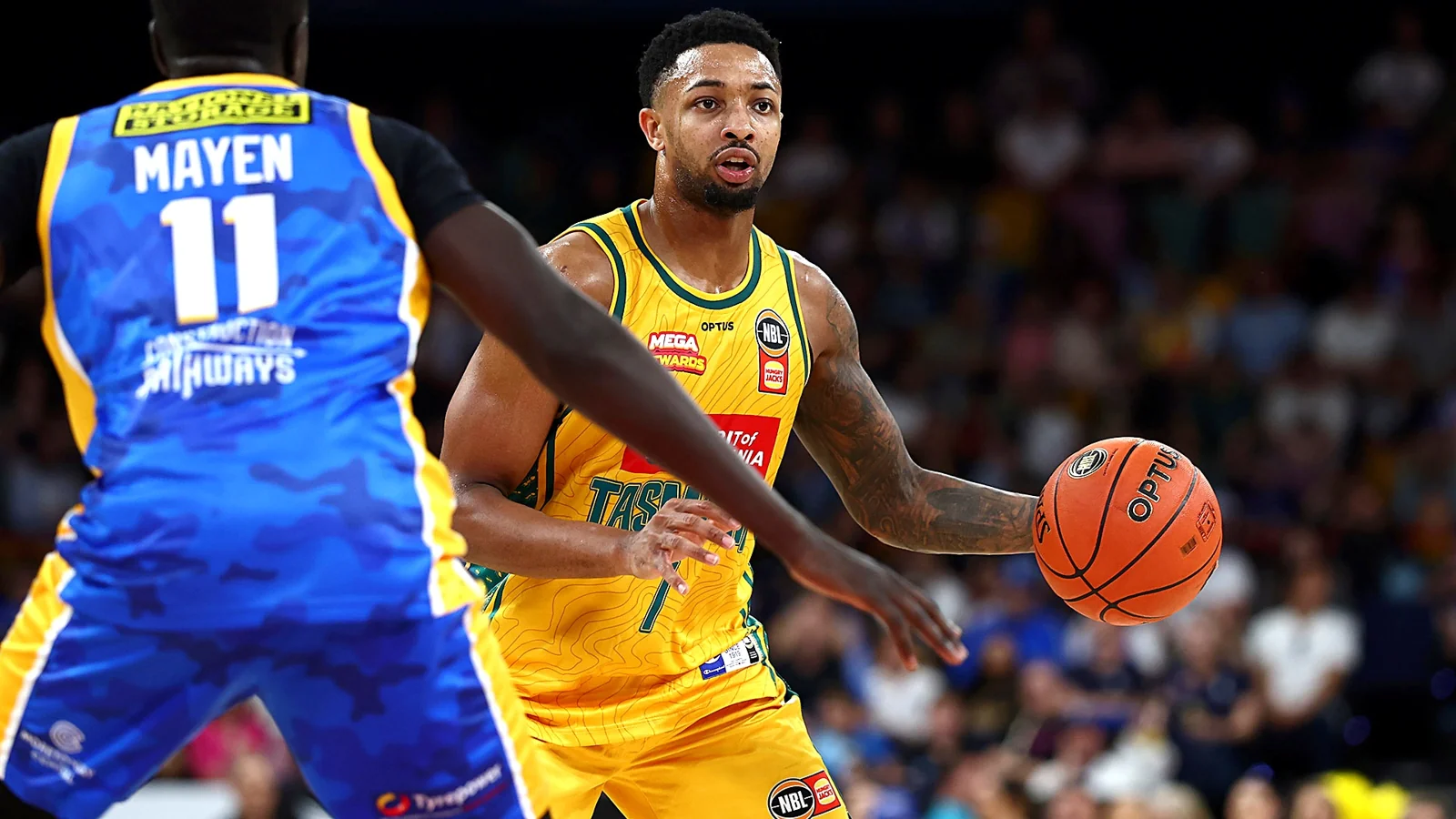
Tasmania's 98-89 win over South East Melbourne on 1 November deserves attention because of the problem the JackJumpers solved. They arrived at John Cain Arena without five rostered players, having played in Launceston on Friday night. A team in that situation needs more than a stirring message. It needs enough organised possessions, reliable defensive work and useful contributions from the players who remain to prevent the absences defining every part of the afternoon.
The immediate injury news concerned David Johnson and Ben Gold. In the league's 31 October report, Scott Roth described Johnson's calf injury and Gold's continuing foot problem. They joined Ben Ayre, Bryce Hamilton and Majok Deng on the sidelines. Roth expected to use development players, but he did not give supporters a firm timetable for the two new absences. The sensible reading is that the rotation had become thinner, rather than that a particular recovery date had been established.
That changes the questions a coach has to answer. Can the team find enough creation without overloading its remaining ball handlers? Can it cover a frontcourt foul problem? Is there a workable combination if the opponent forces a different kind of matchup? Having fewer options does not mean every answer is impossible. It means there is less margin for the first answer to fail, and fewer ways to change the game without asking someone to work outside his usual role.
The turnaround was real, but it was not proof of causation
The itinerary also needs to be described accurately. Tasmania played Sydney in Launceston on Friday, then faced the Phoenix in Melbourne on Sunday. South East Melbourne had not played since the previous Saturday. That is a genuine difference in preparation time. It was not a Saturday-to-Sunday back-to-back, and Tasmania's Friday match was not an away game in Sydney. Those distinctions matter when discussing what the schedule actually demanded.
They do not establish that scheduling caused the injuries. A match list can show when a team played and where it had to travel; it cannot diagnose a calf injury or identify the cause of a continuing foot problem. Nor can a win prove that the workload was harmless. The useful basketball question is how the available group managed the next assignment, with the medical question left to the information actually provided by the club.
The official match report gives a clear answer about the result: Tasmania won and moved to 7-3. Explaining why requires looking past the familiar language about resilience. The opening lead, the spread of responsibility and the response to the Phoenix comeback offer more concrete reasons to understand this performance, while also showing where the next test will come.
Extra possessions built the lead
The most revealing number from Tasmania's first half was not simply the score. It was the 19 second-chance points reported by the NBL's match account, including 12 in the opening quarter. The JackJumpers led 27-18 at the first break and 57-39 at half-time. Recovering after a missed shot gave them another route to scoring, rather than requiring every initial attempt to be excellent.
Second-chance points should be read correctly. They are points scored after an offensive rebound, not a count of the rebounds themselves and not a count of extra possessions. One recovered miss can lead to two points, three points, a foul or another miss. We cannot take the points total and reverse-engineer a precise rebounding percentage from it. What the number does establish is that Tasmania converted a significant part of its continued attacking opportunities into first-half scoring.
That is valuable for a team missing options because it spreads the burden of solving a possession. The original ball handler does not have to create a clean attempt every time if someone can keep the play alive and the group can respond. A recovered ball can also force defenders who had started preparing to run the other way to reorganise. The attacking chance changes before the next pass is made. This is the basketball mechanism behind the advantage, rather than evidence that every rebound followed the same designed movement.
There is a trade-off. Sending players towards the offensive glass can leave fewer bodies protecting against a fast break. Teams must judge when a rebound is realistically contestable and when getting back is the better contribution. Tasmania's first-half return was productive, but it does not turn crashing every miss into a universal instruction. Against another opponent, the same commitment could be punished if the ball escapes quickly to an outlet.
For supporters watching the next game, the interesting detail is who is in position when the shot goes up. Does a perimeter player react to a long rebound? Is the big already engaged with an opponent? Does someone remain available to stop the first pass out? These details help explain whether a team is creating repeat chances through a coherent balance of responsibilities, rather than depending on a favourable bounce.
The early lead bought Tasmania room for the comeback that followed. That makes the work on the glass part of the game's structure, not an ornamental hustle statistic added after the result. But the standard for sustainability is higher than one strong half. The JackJumpers need repeat opportunities without surrendering easy chances at the other end, particularly when the bench has fewer alternatives. That balance is a more useful thing to follow than expecting the next first half to produce the same points total.
Five starters shared the work in different ways
All five Tasmania starters reached double figures. More useful than that headline is the variety of their contributions. The official individual lines show scoring, rebounding and passing spread across the group. That gives a short-handed team several ways to keep a possession moving, even when it cannot call on its usual range of substitutes.
Mathias and Armstrong carried different creation tasks
Dakota Mathias finished with 22 points, seven rebounds and six assists, while Taran Armstrong had 18 points, five rebounds and three assists. Mathias also made three of his five attempts from beyond the arc. Those figures establish a broad contribution from both guards. They do not tell us precisely how often each initiated a particular action, so the safest interpretation concerns the number of useful jobs being shared rather than an invented account of every set.
For a defence, a player who can finish a possession and help create the next one presents a different problem from a player waiting only for a catch. A shooting threat can influence how closely an opponent stays attached; a capable passer can punish a second defender moving towards the ball. The value lies in the relationship between those skills. Tasmania's numbers offer a reason to examine that relationship, rather than reducing the two guards to a simple scoring comparison.
That matters when injuries have removed other sources of offence. If the first action is stopped, the remaining group needs another player who can make the next decision without starting the whole possession again. Supporters should watch whether the second receiver recognises an opening quickly and whether the other three players give him useful space. A box score suggests where to look; the quality of those decisions requires watching the possessions.
Magnay, Bannan and Marshall widened the solution
Will Magnay supplied 15 points, six rebounds, four assists and four blocks. Josh Bannan added 14 points, six rebounds and four assists. Nick Marshall contributed 17 points, seven rebounds, three assists and three steals. The attraction of those lines is that scoring was not the only service the frontcourt and wings provided. They helped finish defensive possessions, move the ball and interrupt the opponent.
A big who can pass gives the offence a potential release when pressure reaches the guard. A wing who rebounds can help complete the defensive work before the next attack begins. These are ordinary basketball responsibilities, but their importance grows when a team cannot easily replace a missing function from the bench. The available players need to connect their jobs, rather than each trying to compensate by taking more shots.
There are limits to the statistical picture. Four blocks do not describe every contest at the rim, and three steals do not tell us whether every defensive gamble was sensible. Nor does a useful assist total reveal each missed passing opportunity. The correct lesson is that Tasmania found production across its starting group. Calling that a permanent answer would require evidence over more games, especially when opponents have time to prepare for the combinations now receiving greater responsibility.
The Phoenix comeback exposed the remaining risk
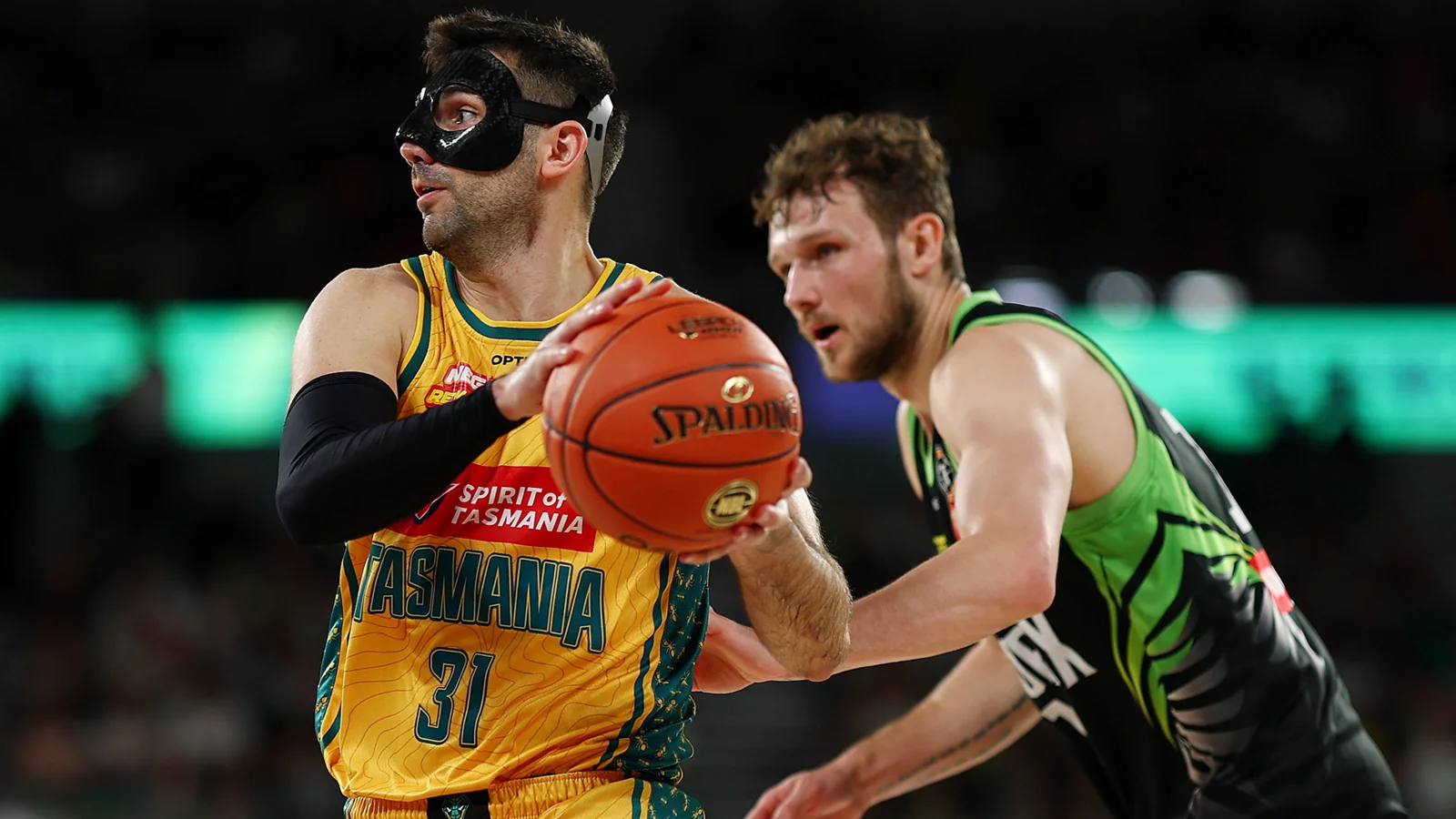
The Phoenix cutting the gap to three late in the game is part of the explanation, not an awkward detail to omit from a story about resilience. Tasmania's first-half work created room, but it did not remove the need to execute under pressure. A reduced rotation can make every difficult stretch feel more consequential because the coach has fewer ways to change the personnel and reset the rhythm.
South East Melbourne recovered to within five during the third quarter before Tasmania reached the final break ahead 76-64. Later, a D'Shawn Schwartz three made it a three-point game with about three minutes left. Tasmania answered with a 6-2 run, and Armstrong's banked pull-up helped finish the job. Those are the useful landmarks in the league's account of the closing stages; they show a lead challenged and a response delivered.
They do not identify fatigue as the cause of every defensive problem. That would require more than knowing the teams' previous fixtures. A comeback can involve shot-making, tactical adjustments, mistakes or several things at once. The right question is what changed in the possessions, not whether the calendar supplies an easy explanation after the fact. This is especially important when a team has won: the result should not excuse a weak explanation of how the pressure developed.
What Armstrong's late jumper did and did not prove
The mid-range finish is an interesting basketball detail because late possessions do not always offer the shot an offence would choose in an empty gym. Defences can take away the first route to the rim or stay attached to the most dangerous perimeter option. A ball handler then needs a workable answer within the space and time that remain. Having another finish available can matter even when that area is not the offence's first preference.
Armstrong's basket demonstrates that he made a useful shot in this game. It does not, alone, establish his season-long efficiency from that distance or prove that every similar attempt is a good choice. The quality of a decision depends on the defender, the time available, the passing alternatives and the state of the game. A made basket and a sound decision can coincide; they are still different judgements.
For the JackJumpers, the encouraging part was that the closing group found a response after the lead had become uncomfortable. For the next opponent, the interesting challenge will be to prevent that response without opening something easier elsewhere. Fans should watch the sequence leading to the shot: whether the ball handler had room, whether help was drawn and whether teammates remained available. That produces a more useful appraisal than turning one memorable bank shot into either proof of complete control or an admission that the win relied only on luck.
What has to travel into the next game
The next assignment identified in the match report is a Friday-night meeting with the New Zealand Breakers in Launceston. That gives Tasmania another chance to test its solutions in a different matchup. It also shifts the discussion from celebrating what happened against the Phoenix to asking which parts of the performance can be repeated. The final score is a result to bank; the mechanisms behind it are the things the team can try to carry forward.
Availability will be the first variable. The league's rolling injury guide continues to list the absent players, with some return windows and some uncertain timelines. Those entries are guides, not guarantees of medical clearance. A current club update should take priority when making plans around who will play. The win over South East Melbourne does not establish that Tasmania should hurry anyone back or that the remaining group can absorb any workload indefinitely.
On court, watch the relationship between offensive rebounding and transition defence. Tasmania gained real scoring value from continued first-half opportunities against the Phoenix. Repeating the commitment is useful only if the team also protects the space behind it. A different opponent may send the first outlet pass earlier or position a runner where the JackJumpers cannot recover. That makes the balance a tactical decision to keep adjusting, rather than a fixed instruction to chase every missed shot.
Then watch who makes the second decision in a possession. Can Mathias, Armstrong and the frontcourt keep the ball moving when the first action stalls? Does the next receiver have a clear passing option? A short-handed team benefits when the same few players do not have to create every advantage from a standing start. Shared responsibility becomes valuable through the timing of those decisions, not merely because several names appear in double figures.
The bench matters even when its points total is modest. Useful minutes can mean maintaining defensive positioning, protecting the ball, setting a solid screen or allowing a starter to return without the game having changed beyond recognition. None of those tasks requires a substitute to imitate the player who is absent. The standard is whether the replacement minutes preserve a functioning team. That is a more constructive way to watch development players than measuring every contribution against an injured senior player's usual output.
Use the fixtures, injury updates and lineups to establish the next game's circumstances, then judge what Tasmania does within them. One win does not erase the shortage of options, but this one demonstrated that the available starters could share the work and answer a serious late challenge. The most encouraging sign in the next game would be the same clarity of responsibility, even if the scoring pattern is different. That is the part of surviving an injury crisis that can become a repeatable basketball strength.
Join the conversation
Share a question or a thought about NBL basketball. Comments are reviewed before they appear. Keep it friendly and on topic.
No comments yet. Start the conversation.
Sign in with Google to leave a comment. Your email address is not displayed.